Sea Animals in English for Kids
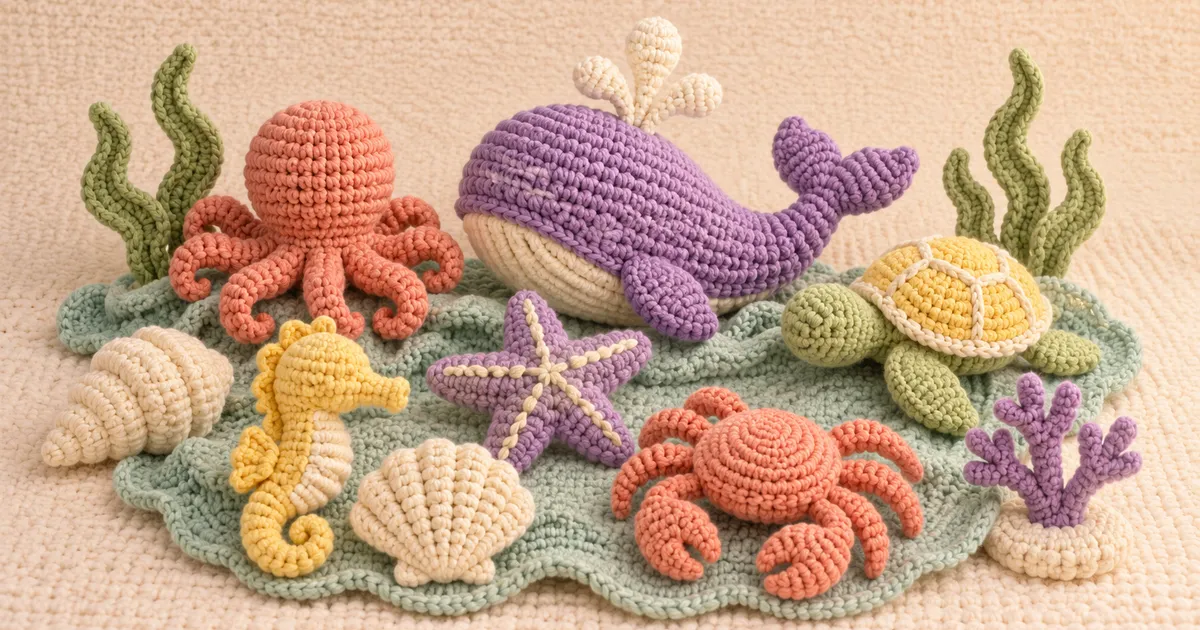
Fifteen well-chosen words give children a practical first set of sea animal vocabulary. Sea Animals in English for Kids: Words and Tips begins with fish, sharks, whales, and dolphins, then adds animals children can sort, describe, and use in sentences. Younger learners can use pictures, sounds, and actions. Older children can compare animals, explain habitats, and share facts. The goal is to recognise each word, pronounce it accurately, and retrieve it while speaking, reading, or playing.
📥 Sea Animal Word Explorer
Learn, say, remember, and practise useful ocean words
Leave your email — we'll send the PDF to your inbox.No spam — the PDF plus one short reminder. Unsubscribe anytime.
Why Sea Animal Vocabulary Gives Children a Head Start
Photos, toys, drawings, and videos make sea animals concrete. Their shapes differ visibly: a crab has claws, a ray is flat, and an octopus has eight arms. These features connect each English word with a strong mental picture.
A Sea Animals in English for Kids: Words and Tips lesson supports core grammar. Children can practise singular and plural forms, size, colours, movement verbs, and comparisons: “The whale is bigger than the seal” or “The crab walks, but the dolphin swims.”
Multilingual children may know these animals in two or more languages. Use that knowledge: say the English word, match it to the creature, and avoid testing through translation alone. Build a direct link between the animal and its English name.
The Core Word List: 15 Animals to Learn First
The sequence in Sea Animals in English for Kids: Words and Tips moves from short, familiar words to longer names. Teach three to five at a time. Add another group when your child recognises most earlier animals without hints.
Use the clues as prompts, not definitions to memorise. Ask, “Which animal has a shell and flippers?” Later, show a sea turtle and ask your child to describe it without the sentence.
Pronunciation Patterns Worth Noticing
Stress the first part of longer words. Say OC-to-pus, DOL-phin, and PEN-guin with a strong first beat. Children can tap once on the stressed syllable, then speak the quieter parts without stretching each sound.
Split compound words into familiar pieces: sea + horse, star + fish, and jelly + fish. Practise each part, then join them at normal speed. Keep sea turtle as two distinct words.
Short contrasts expose blurred sounds. Alternate seal and sea, or crab and cab. Do not demand one country’s accent. Steady, intelligible speech matters more than copying a national model.
Memory Techniques That Work Across Ages
Treat Sea Animals in English for Kids: Words and Tips as a learning sequence, not a one-day challenge. Introduce a small group, recall it after a break, and revisit it later. Let the child retrieve each word before revealing the answer.
Pair words with movements: open and close two hands for crab, wave eight fingers for octopus, or glide both arms for ray. School-age kids can sort cards into mammals, fish, birds, and other groups. Older learners can add habitat, diet, and one accurate fact.
Contrasts separate similar words. Ask, “Which is bigger, a dolphin or a crab?” and “Which has claws, a lobster or a jellyfish?” Each fact should lead back to the English word and a complete sentence.
Practice Activities at Home
Try a two-minute picture hunt. Name a sea animal and ask your child to point to it, draw it, or find it among mixed cards. Exchange roles so your child gives the clues. For quiet practice, use animal worksheets for kids learning English and request a spoken sentence after each answer.
Mystery Sea Animal
Choose an animal without naming it. Give three clues: “It is flat. It has a long tail. It glides over the sand.” Your child guesses “ray” and creates another riddle. Younger children may point to pictures; older children should answer in a full sentence.
Build language beyond nouns. One child can place toy animals while another follows directions: “Put the crab beside the sea turtle.” Older learners can join facts using compound sentences for kids: “A penguin is a bird, but it cannot fly.” LearnLink tutors adjust vocabulary and sentence length to each learner’s age and confidence.
Common Mistakes to Avoid
Do not treat the word list as the final goal. A child who chants “shark, dolphin, whale, crab” may still miss whale in a sentence. Check understanding with mixed pictures, fresh examples, and questions requiring a choice or description.
Avoid correcting every sound at once. Choose one feature, such as the first sound in shark or the stressed syllable in octopus. Model it, invite another attempt, and continue. Constant interruption turns a speaking game into a test.
Do not overload one session. Three secure words beat fifteen half-learned ones. Avoid misleading groups: whales and dolphins are mammals, while penguins are birds. Children need no science lecture, but accurate categories prevent later confusion.
- Try practicing five sea animal words with children aged four to six daily.
- Use a picture book and ask children to name each animal aloud.
- Practice one pronunciation challenge, such as dolphin, turtle, or octopus, slowly.
- Avoid teaching too many words; review six familiar animals before adding new ones.
- Play a two-minute sorting game grouping sea animals by size or habitat.
When a word has several meanings or pronunciations, Cambridge Dictionary is a useful check before turning it into child-friendly examples.
Frequently Asked Questions
How Many Sea Animal Words Should My Child Learn at Once?
Most beginners can study three to five new words in a short session. Include earlier words so children retrieve them again. Recognising pictures without naming them signals a need for recall practice. Add words when the current set appears in spontaneous answers, instructions, or descriptions.
Should We Use Translations When Learning Sea Animal Words?
Translation can confirm meaning for a multilingual child, but should not be the only route to a word. Sea Animals in English for Kids: Words and Tips works best with pictures, actions, clues, and sentences. These connect octopus directly with the animal, without translation before speaking.
What If My Child Mixes up Similar Sea Animals?
Place two animals side by side and compare one feature at a time. A squid has a longer body; an octopus has a rounder body and eight arms. A seal has flippers; a sea turtle has flippers and a shell. Ask your child to point, choose, and explain. Repeated comparison beats giving the answer.
How Can We Check Progress Without Giving a Test?
Use the words in a new setting. Show unfamiliar pictures, request a riddle, or say, “Put the animal with claws beside the whale.” Progress means recognising a word in a sentence, retrieving it without a model, and using it to describe or compare an animal. Keep checks brief and playful.
A short one-to-one lesson can show what level and pace fit your child — book a trial English lesson.
Stay updated on our latest tips and resources by following us on Instagram LearnLink.